Robotic Bypass Surgery: Is there a difference between various techniques?
Robotic bypass surgery is a relatively new technique of doing a bypass with the help of a surgical robot. The robot may be used entirely to do the procedure or may be used in the initial part of a minimally invasive CABG or MICS CABG to harvest blood vessels from the chest that are subsequently used for the bypass itself.
What is robotic bypass surgery?
Precision surgery through tiny openings.
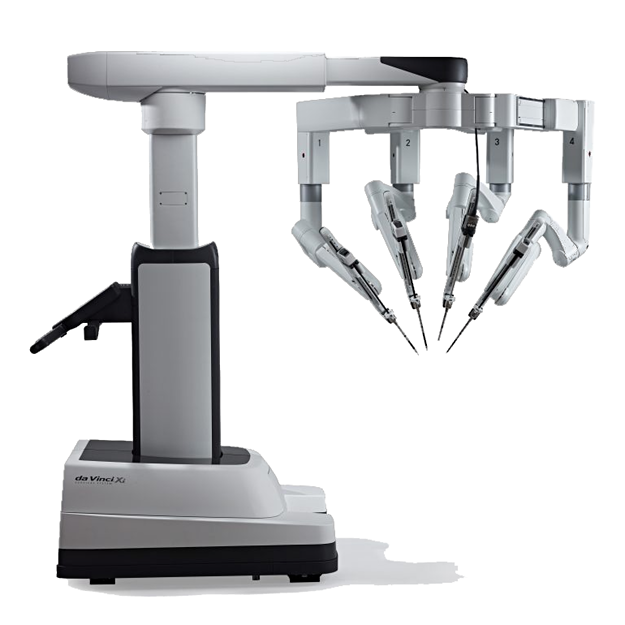
Robotic bypass surgery uses advanced robotic arms controlled by the surgeon to create new routes for blood flow around blocked coronary arteries. The procedure is performed through small keyhole incisions measuring 0.8mm between the ribs — without splitting the breastbone — allowing for less pain, minimal scarring, and a much faster return to daily life.
3300+
Robotic and MICS CABG procedures performed
0.5%
Procedural Risk (Expert Centre)
7 days
Return to Normal Activity
13+ years
Proven Clinical Outcomes
The comparison
Two operations. One outcome.
A very different experience.
The graft is the same. The exposure is not — and that is what shapes your recovery, your risk profile, and your quality of life for months afterwards.
Open CABG
Traditional 1970
The chest is opened through a full sternotomy. Access is direct, but so is the injury.
- LIMA harvest by hand
- Breastbone (sternum) is cut and wired
- Higher blood loss, often needs transfusion
- Significant pain, requires stronger analgesics
- Recovery of up to 3 months
- Risk of sternal wound infection / osteomyelitis
- No specific benefit for diabetics or elderly
- Prominent midline scar
Robotic / MICS CABG
Recommended
Minimally invasive
- Robotic IMA harvest (LIMA & RIMA)
- A small incision between the ribs. No bone cut.
- Same grafts, same durability
- No bone is cut — sternum stays intact
- Negligible blood loss, rarely any transfusion
- Mild pain managed with simple medication
- Back to normal activity in ~10 day
- No sternal / bone infection risk
- Strong benefit for diabetics and elderly patient
- Small cosmetic scar hidden under the chest
AT A GLANCE
Every difference that matters, in one table.
We compare only the variables patients ask us about most — the ones you feel in the days, weeks and months after the operation.
FACTOR
Internal Thoracic Artery Harvesting
Incision
Breastbone
Heart Lung Machine
Blood Loss
Hospital Stay
Full Recovery
Wound Infection
Scar
Diabetic Patients
Total Arterial Grafting
Open CABG
Harvested by Hand (Mostly left)
10–12 inch sternotomy
Cut and wired back together
Almost always used
Significant, often transfused
7–10 days
8–12 weeks
Risk of osteomyelitis
Prominent midline scar
Higher complication rate
Usually Not Done
ROBOTIC / MICS CABG
Robotic Harvest (Both right and left)
2–3 inch left-chest incision
Completely preserved
Usually avoided (beating heart)
Minimal, transfusion rare
3–5 days
~10 days to normal activity
Essentially eliminated
Small, cosmetically hidden
Same low rate as others
Common & Ideal (Especially younger age)
ADVANTAGES
Why patients — and increasingly their surgeons — choose the robotic route.
No sternum is cut
The breastbone is left completely intact. Access is through small ports between the ribs — no bone healing, no wiring.
Faster recovery
Most patients walk within 24 hours and return to normal life in about 10 days instead of 8–12 weeks.
Beating-heart surgery
Bypass grafts are placed while the heart continues to beat, avoiding the heart-lung machine in most patients.
Less pain, less blood loss
Small incisions mean simple painkillers, rarely any transfusion, and no risk of sternal wound infection.
All vessels can be grafted
Single, double, triple or more — including right-sided vessels. Complete revascularization, minimally invasive.
Better for diabetics & elderly
Avoiding a sternotomy removes the single biggest source of wound complications in high-risk patients.
THE PROCEDURE
How a robotic bypass actually happens.
The graft — the artery or vein used to bypass the blockage — is exactly the same as in open surgery. What changes is how the surgeon reaches the heart and how your body pays for the access.
Small port access
A 2–3 inch incision on the left chest between the ribs, plus 2–3 keyhole ports. No sternum is touched.
Robotic vessel harvest
The internal mammary artery — the most durable graft in cardiac surgery — is harvested robotically with millimetric precision.
Beating-heart bypass
The graft is sutured to the blocked coronary artery while the heart continues to beat. The heart-lung machine is avoided in most patients.
Rapid recovery pathway
Most patients are extubated in the OR, walk within 24 hours, and go home in 3–5 days.
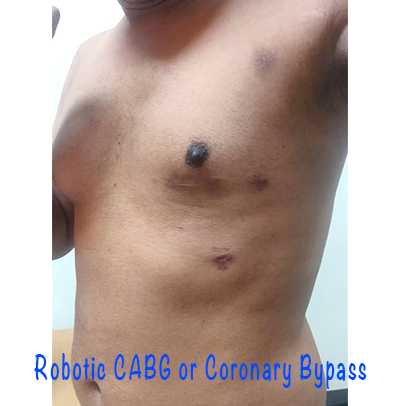
The image on the left shows the small cut through which a robot assisted bypass surgery is performed. The right is a video demonstrating how the internal mammary is harvested. Both the right and the left are then used to do the bypass by joining them.
FREQUENTLY ASKED
Straight answers from the operating room.
Is robotic / MICS CABG as durable as open bypass?
Yes. The grafts and long-term patency are identical to open CABG. Durability depends on surgical skill, not the size of the incision.
Can all blocked vessels really be bypassed?
Yes — including the right-sided vessels. The belief that right-sided vessels can’t be reached is a myth from surgeons untrained in the technique.
Who is not a candidate?
Patients with severely damaged heart muscle, unstable ongoing chest pain, or a body habitus that prevents port access may need traditional surgery. Your surgeon will decide.
Is it more expensive?
Overall cost is often comparable once you factor in shorter ICU stay, fewer transfusions, and a dramatically faster return to work.
How long does it take to recover after a robotic bypass surgery?
Most patients leave the hospital in 2 - 3 days and return to routines including driving a care in 5 days. Near complete recovery is possible in a week to 10 days in all patients.