

Robotic
Aortic Valve Replacement
Robotic aortic valve replacement or RAVR, India's most advanced surgical technique for aortic valve replacement.
9000+
Open Heart
Procedures
4500+
Minimally Invasive
Surgeries
700+
Robotic Heart
Procedures
23+
Years of Experience

How is a robotic aortic valve replacement performed?
Robotic aortic valve replacement is the most advanced technique of surgically replacing the aortic valve. We use the latest generation of the Da Vinci Xi robotic system to replace the valve. This is performed though tiny 8mm ports placed on the side of the chest. All types of valves can be implanted through this technique. The video on the left shows how the procedure is performed.
Apollo Hospital · Bengaluru
Your In-hospital journey
From admission the evening before surgery to discharge home — robotic aortic valve replacement is the fastest-recovering surgical option available.
Pre-operative work-up
You are admitted the evening before surgery for a comprehensive assessment. This unhurried workup ensures everything is in order so the morning runs smoothly and safely.
Anaesthesia & positioning
You are taken to the operating theatre where the anaesthetic team places IV lines and induces general anaesthesia. A specialised breathing tube allows single-lung ventilation. You are positioned on your right side and draped for a right-lateral approach.
Robotic Aortic valve replacement
The Da Vinci Xi robot is docked via three 8 mm ports on the right chest — no rib cutting, no rib spreading. Under 3D × 10 magnification the surgeon removes the diseased valve and precisely seats the new prosthesis with interrupted sutures. The heart is restarted and the ports closed.
ICU monitoring & early mobilisation
You are transferred to the ICU for close haemodynamic monitoring. Most patients are extubated in the operating room itself. Within 4 hours of leaving theatre you will be sitting up and taking your first steps with physiotherapy support — a milestone that is simply not possible after open surgery.
Ward review & discharge preparation
Moved to the room/ward once stable. The chest drain is removed and a post-operative echocardiogram confirms the new valve is functioning perfectly. Oral medications are started, wound care instructions given, and your anticoagulation plan is finalised.
Home — with a follow-up already booked
You leave hospital within 24 to 48 hours of your operation — significantly earlier than open or minimally invasive surgery. Your outpatient follow-up appointment is already scheduled for 3 days after discharge so nothing is left to chance.
First outpatient clinic visit
A dedicated review to check wound healing, confirm valve function on repeat echocardiogram, and review blood results including INR if relevant. Activity resumption is discussed — most patients are managing self-care and light activity comfortably at this stage.
Key milestones at a glance
What is the difference between robotic aortic valve replacement and the minimally invasive approach?
Robotic Aortic Valve Surgery
- ✅ 8mm incision
- ✅ No rib cutting
- ✅ No rib spreading
- ✅ Negligible blood loss
- ✅ Least painful
- ✅ Fastest healing
- ✅ 1 day hospitalisation in most patients
- ✅ Back to Work as early as 3 days
- ✅ Excellent visibility - 3D, 10X magnification
- ✅ Easy on the surgeon
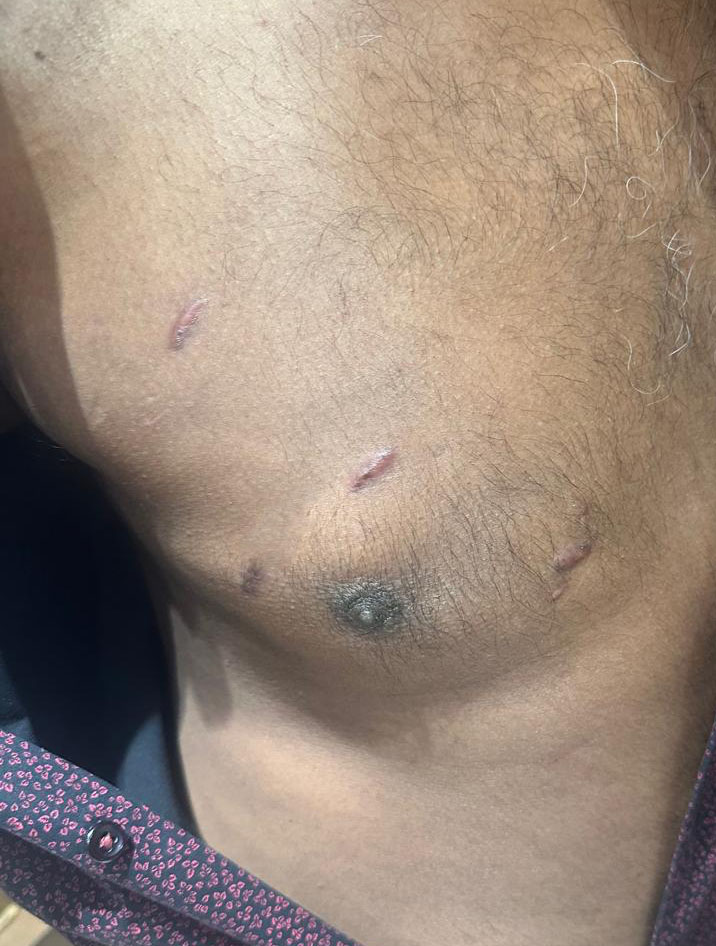
Robotic Aortic Valve Surgery
Minimally Invasive Aortic Valve Surgery
👎🏻 3 inch (7.5cm) incision
✅ No rib cutting
👎🏻 Rib spreading with a retractor
✅ Negligible blood loss
👎🏻More painful
Acceptable healing
3 day hospitalisation in most patients
👎🏻 2 to 3 weeks for recovery
👎🏻 Reduced visibility when compared to robotics, No magnification
👎🏻 Difficult on the surgeon
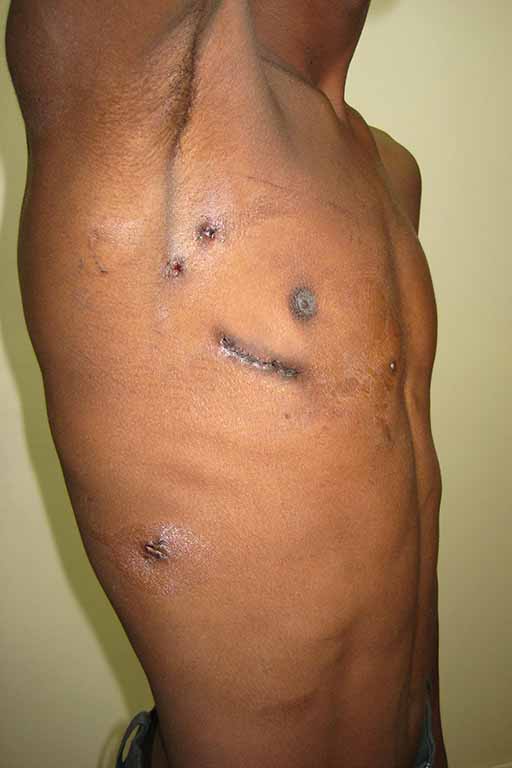
Minimally Invasive
What is aortic valve replacement and when is it needed?
AVR is a surgical procedure where a diseased aortic valve is replaced. Aortic stenosis (narrowed) or Aortic regurgitation (leaking) are two conditions most commonly requiring a replacement.
What is the difference between a mechanical valve and a biological valve?
Mechanical valves are carbon based and exceptionally durable often lasting several decades. They need lifelong anticoagulation which is a major drawback in pregnant women or older patients where it can cause life threatening bleeding. Inadequate anticoagulation can cause strokes from small blood clots that can form on the valve. In contrast, biological valves (bioprostheses), made from animal tissue (pig or cow), eliminate the need for prolonged blood thinners. Durability is a major drawback with bioprosthetic valves usually lasting for 10 to 15 years depending on the age at which they are implanted.
What is aortic valve replacement and when is it needed?
AVR is a surgical procedure where a diseased aortic valve is replaced. Aortic stenosis (narrowed) or Aortic regurgitation (leaking) are two conditions most commonly requiring a replacement.
What is the difference between a mechanical valve and a biological valve?
Mechanical valves are carbon based and exceptionally durable often lasting several decades. They need lifelong anticoagulation which is a major drawback in pregnant women or older patients where it can cause life threatening bleeding. Inadequate anticoagulation can cause strokes from small blood clots that can form on the valve. In contrast, biological valves (bioprostheses), made from animal tissue (pig or cow), eliminate the need for prolonged blood thinners. Durability is a major drawback with bioprosthetic valves usually lasting for 10 to 15 years depending on the age at which they are implanted.
What are the various ways of replacing the aortic valve?
There are four different options for replacing the aortic valve. 1. Open Surgery: This is the oldest technique where the chest is opened in the middle to replace the valve. 2. Minimally Invasive Surgery or MICS: This is more advanced and no bones are cut. Valve is replaced from the right side of the chest through a small cut between the ribs. 3. TAVI or TAVR: More advanced where the valve is replaced via the groin without cutting the chest in very old or sick patients. Durability may be a problem 4. Robotic Replacement: Robot used to replace through small holes on the right side of the chest. All types of valves can be used with the robot.
Is robotic aortic valve replacement available in India?
Yes, robotic aortic valve replacement is available in India at Apollo hospital in Bengaluru. It's routinely performed but is not available in most hospitals in the country.
Is robotic aortic valve replacement better than TAVI?
Robotic aortic valve replacement is the most advanced surgical technique for replacing the aortic valve. It can be performed for all patients who need an aortic valve replacement but should be fit for surgery. Unlike TAVI, patients with all kinds of anatomy and heavily calcified valves are still suitable for robotic AVR.
What is TAVR/TAVI, and is it available in India?
TAVR (Transcatheter Aortic Valve Replacement) and TAVI (Transcatheter Aortic Valve Implantation) are two names for the exact same minimally invasive procedure, completed without opening the chest. The heart is accessed through a small incision in an artery, most often in the groin. Its generally indicated for sick patients who are older or unfit for surgery.
Which valve is better, TAVR or Surgical Valve?
Surgical valves are more durable than TAVI valves. Limited data is available for TAVI valves. In younger patients surgical bioprosthetic valves definitely last longer and this has a huge impact on life expectancy and repeat interventions. TAVI valves are best suited for older (>75yrs) patients who are unfit for surgery.
Aortic Valve Replacement
The aortic valve can be replaced in different ways. The most common and time tested technique is do it surgically. However, this does not mean that open surgery is required. Minimally invasive and robotic aortic valve replacement are advanced techniques that do not require open surgery.



About Aortic Valve Clinic
The aortic valve clinic gets you in touch with a specialist who can guide you in what’s best in treating your aortic valve disease. There are various options from catheter based therapies (TAVI) to robotic aortic valve replacement. Treatments need to be tailor made based on several patient factors as well as cost.
Our Services
The aortic valve clinic runs Monday to Friday and consultations are only on prior appointment. Expect to spend 30min to an hour at the consult.

Meet the Surgeon
The surgeon will do a quick review and discuss relevant questions.

Evaluation
Further investigations if any are requested to complete evaluation and help decision making.

Blood Work
Any required blood investigations are requested. This is more often in diabetics and those with kidney dysfunction.

Cross Consultations
You may require to be seen by other specialists including a cardiologist.

Treatment Options
Once the decision is made the treatment options are discussed.
Scheduling
Depending on severity the surgery is scheduled. It may not always be immediate.
Get the Care You Need
The first robotic aortic valve replacement in India was performed at Apollo Hospital, Bengaluru by Dr Sathyaki Nambala and team in 2021. We currently have the largest experience in robotic aortic valve replacement and are leaders in this area. The procedure is performed several times each month.

Advanced Outcomes.
Call for Advanced Techniques.
Why Choose Us?
Accessible Healthcare for Everyone
We are accessible for all and our teams guide patients on the right aortic valve procedure.
Team of Experienced Professionals
Our experience in the most advanced techniques in aortic valve replacement surgery is simply unmatched.
Patient-Centered Care Personalized Attention
Our focus is on quality and not quantity, offering patients a highly personalized care environment.
Empowering to Achieve Your Best Health
We offer the very best that the world can offer helping you achieve outcomes that are unmatched.
%
Freedom from Transfusion
%
Need for Pacemaker

Freedom from Complications
How safe is robotic aortic valve replacement?
There are several factors that determine the safety of a Robotic aortic valve replacement. In general the risk is approximately 0.5%. The risk depends on the patients pre surgical condition or reserve and the presence of additional risk factors such as obesity, diabetes, lung function and several others. A frail patient has a higher risk than a fit patient. There are several advantages as well that make the procedure superior to other alternative techniques. The risk of infection is near zero and most patients are fit to go home the next day. Remember, surgical aortic valves have the longest durability with the best valves lasting for over 15 or 20 years.
How much does aortic valve replacement cost in India?
Aortic valve
replacement guide
Each tier builds upon the previous — understand what you're paying for at every stage.
Total cost
₹7,00,000
Total cost
₹9,00,000
Total cost
₹11,50,000
Costs are indicative and may vary by hospital, city, and patient profile