
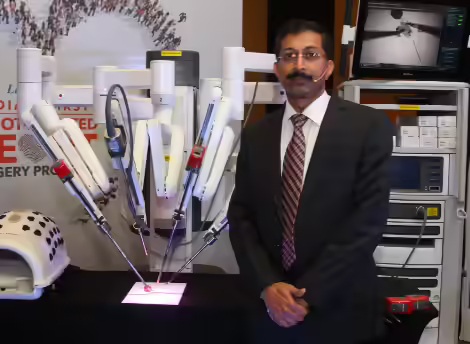
On December 19, 2019, during a medical discussion focused on advancements in cardiac surgery, Dr. Sathyaki spoke about the evolving role of robotic-assisted technology in heart procedures and its impact on modern surgical practice.
Robotic-assisted heart surgery is a minimally invasive approach in which the surgeon operates robotic instruments through a console. The robotic system does not function independently; instead, it translates the surgeon’s hand movements into precise instrument actions, allowing enhanced control and accuracy during surgery.
Transition from Conventional Open-Heart Surgery
During the discussion, Dr. Sathyaki explained that conventional open-heart surgery typically involves opening the chest by dividing the breastbone to access the heart. While effective, this approach can be associated with significant pain and longer recovery periods, particularly for elderly patients or those with conditions such as diabetes or obesity.
In contrast, robotic-assisted surgery is performed through small ports, usually around 8 mm in size, enabling surgeons to perform cardiac procedures without opening the chest wall or cutting bone.
Advantages of the Robotic-Assisted Approach
Dr. Sathyaki highlighted several benefits observed with robotic-assisted cardiac surgery, including:
-
Reduced blood loss
-
Lower risk of infection
-
Faster healing and recovery
-
Improved post-operative comfort
The robotic system also provides a high-definition, three-dimensional view of the surgical field, supporting precision during complex procedures.
Procedures Currently Performed Using Robotic Assistance
As discussed during the session, robotic-assisted cardiac surgery is currently used for selected procedures such as:
-
Removal of cardiac tumours including myxomas
-
Repair of congenital heart defects like Atrial Septal Defects (ASD) and Ventricular Septal Defects (VSD)
-
Heart valve repair and replacement surgeries
Dr. Sathyaki also noted that robotic-assisted coronary bypass surgery remains in early stages globally due to technological limitations.
Patient Selection and Limitations
The discussion emphasized that robotic heart surgery may not be suitable for all patients. In young children, the limited space between the heart and chest wall makes the use of current robotic instruments challenging, making careful patient selection essential.
Training and Surgical Expertise
Robotic-assisted cardiac surgery requires specialized training and coordination among surgeons, anesthesiologists, nurses, and technical staff. The surgeon operates the robotic system from a console near the operating table while the surgical team continues to perform roles similar to conventional cardiac surgery.
Looking Ahead
Dr. Sathyaki concluded by noting that robotic-assisted surgery represents a significant advancement in cardiac care. As technology evolves and experience grows, robotic techniques are expected to play an increasingly important role in selected cardiac procedures.